Baby & Child Safety · 1 – 2 years
Furniture tip-over: how to anchor TVs, drawers and bookcases
Why toddlers climb and pull on furniture, which pieces are highest risk, and how to anchor TVs, chests of drawers, bookcases and wardrobes using official UK and Irish safety advice.
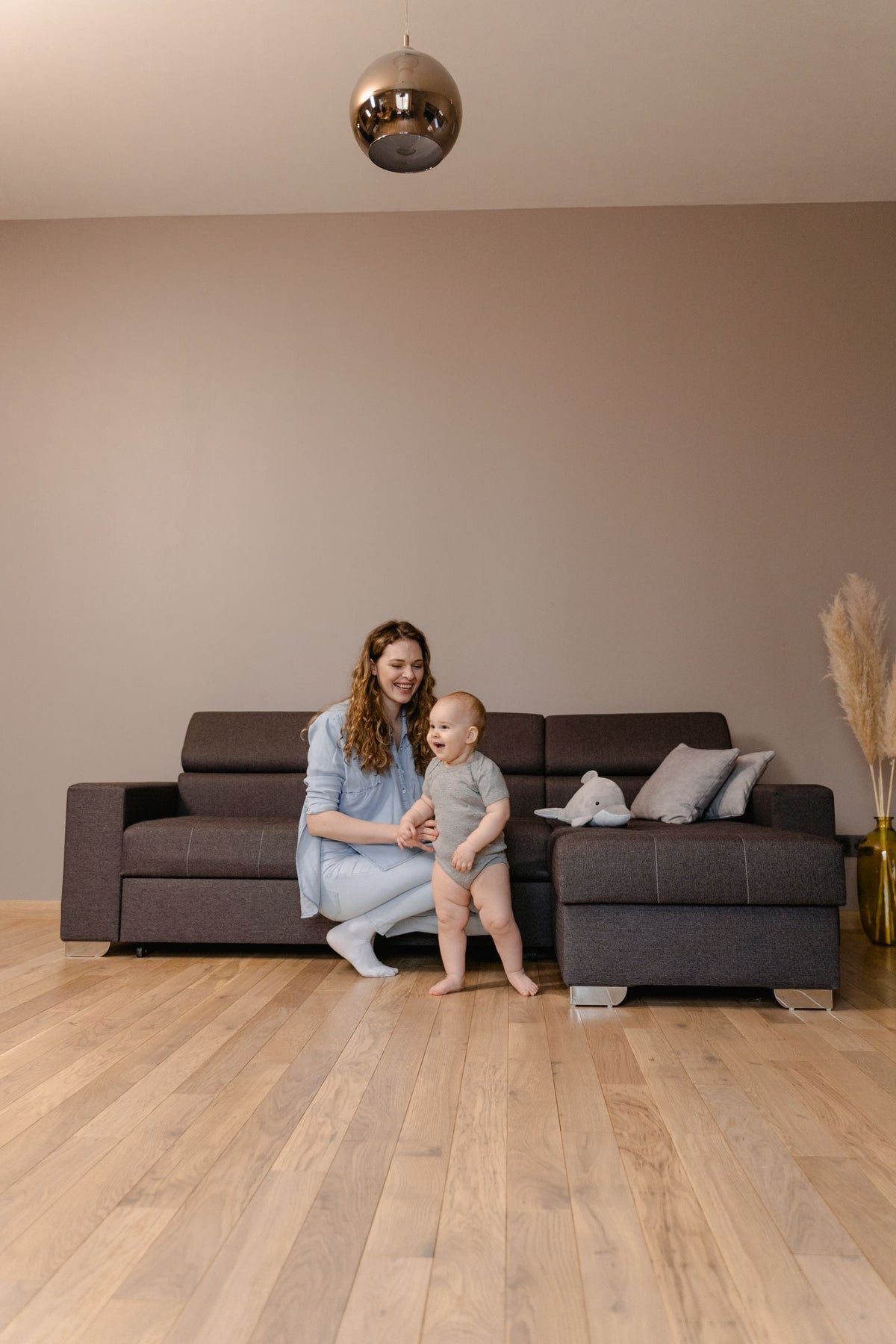
The day your toddler learns to pull themselves up is a big one. Not long after, they're climbing: onto the sofa, up the shelves, into open drawers. Furniture that feels rock solid to an adult can tip when a small child climbs or pulls on it, and a falling chest of drawers, bookcase or TV can cause serious harm.
We're Dave and Alan, two brothers and dads who went through this in our own homes before starting BeeGo. This guide pulls together advice from RoSPA, the HSE and Ireland's Competition and Consumer Protection Commission (CCPC) on which furniture to secure, how to fix it to the wall, where to put the TV and the small habits that make climbing less tempting.
Quick check: walk through each room and ask three questions about every tall or heavy piece. Is it fixed to the wall? Could my child climb it or pull on it? Is there anything on top they'd want to reach?
Why toddlers climb and pull
The HSE explains that as children start to walk they take more risks, become curious and want to climb and explore, and that climbing is a big part of their development. They'll try to reach things at and above their own height, including things that will soon be within range.
The CCPC points out that children are curious and don't understand danger: if they can see something, they may try to get it. Young children also pull themselves up on whatever is nearby, including a TV stand or other furniture. RoSPA warns that heavy objects, including furniture and TVs, have seriously injured and killed children when they were pushed or pulled over onto them.
Which furniture is highest risk
RoSPA's advice is that furniture at risk of being pulled over should be secured to the wall. The HSE says to secure all free-standing furniture to the wall or floor, warning that it can cause serious or fatal injury if the item or its contents fall on your child. Pieces to look at first:
- Chests of drawers. RoSPA puts it simply: sets of drawers, in a child's eyes, make ideal climbing frames, but if unsecured they pull over easily. The HSE adds that open drawers get used as steps.
- TVs and TV stands. Both the HSE checklist and RoSPA single these out.
- Bookcases and shelving units. Named by the HSE and the CCPC, especially when heavy things are stored high up.
- Wardrobes and other tall units. Any tall, free-standing piece a child could pull on falls under RoSPA's advice to secure furniture at risk of being pulled over.
- Coat stands, desks and tall kitchen appliances. The HSE includes coat stands, the CCPC includes desks, and RoSPA includes tall kitchen appliances that could be pulled over.
Lancashire County Council advises anchoring furniture in every room, not just your child's bedroom.
How to anchor furniture to the wall
- Use straps or brackets. The HSE recommends fixing furniture with brackets or straps, and the CCPC suggests safety straps or L-brackets for shelves, desks and drawers. The CCPC notes these are sold in baby and children's furniture shops and in hardware and DIY shops, and that staff can advise if you're unsure.
- Fit what came in the box. Many pieces come with their own anti-tip fittings. The CCPC advises fitting any safety devices supplied with the furniture and following the manufacturer's instructions.
- Fix into something solid. A strap is only as strong as what it's screwed into. RoSPA's advice for wall brackets is to use a solid wall, and on plasterboard walls to fix into the wooden studs behind. Use screws and wall fixings suited to your wall, and if you're not sure what your walls are made of, RoSPA suggests getting a skilled tradesperson to do it.
- Keep straps out of reach. The HSE advises keeping straps out of your child's sight and reach, so they don't become something new to pull on.
TV placement
The official advice on TVs is consistent:
- Don't put a TV on a chest of drawers. The HSE advises against putting TVs on cabinets or chests of drawers because children will often climb open drawers to reach the TV. The CCPC says the same about any furniture not designed to hold a TV, and about other heavy objects.
- Use the right base. RoSPA advises standing a free-standing flat-screen TV on the wide, stable base the manufacturer designed for it. Lancashire County Council suggests placing a TV towards the back of the unit it sits on.
- Fit anti-tip straps. RoSPA recommends straps attached to the back of the TV and secured to brackets fixed to the wall.
- Wall-mounting? RoSPA advises using a solid wall, fixing into the studs on plasterboard, following the manufacturer's instructions and using a skilled tradesperson if you're unsure.
- Discourage pulling up on the TV. RoSPA advises discouraging toddlers from pulling themselves up using the TV or the furniture it stands on, and keeping children well away while heavy items like TVs are being moved.
Don't give them a reason to climb
Anchoring deals with the furniture. These habits deal with the temptation:
- Nothing tempting on top. The CCPC advises against leaving toys or remote controls on furniture, as children may try to reach them, and Lancashire County Council gives the same advice about toys and other attractive items.
- Keep heavy things low. Store heavy items on lower shelves or in the lowest drawers, as the CCPC suggests, and keep them off the top shelves of bookcases.
- Keep bedroom furniture to a minimum. The HSE suggests fewer pieces in a child's bedroom so there's less to climb, and making sure nothing is lying around that a child could climb onto.
- Keep furniture away from windows. RoSPA and the HSE both warn that furniture near a window gives a child a way up. Our room-by-room baby-proofing checklist covers this for every room.
- Set a simple rule. The CCPC advises not letting children climb or hang onto drawers, doors or shelves.
Drawer stoppers and drawer locks
Pulled-out drawers turn a chest into a staircase and shift its weight forward. The CCPC lists drawer stoppers alongside safety straps and L-brackets, and Lancashire County Council suggests fitting locking devices to drawers so they're harder to use as steps. The HSE checklist also recommends safety locks on drawers holding knives, scissors and other dangerous or breakable items.
Adhesive cabinet straps, like ours, can help keep drawers closed so they're harder for a toddler to pull open. They're designed to keep drawers and doors shut, not to hold furniture to the wall, so always anchor the unit itself as well. Fit them on a clean, dry, smooth surface and allow 24 to 72 hours for the adhesive to bond before use.
Buying new or second-hand furniture
Lancashire County Council suggests choosing low-set furniture or pieces with sturdy, broad bases, and looking for included safety information or anchoring fittings. In the shop, pull out the top drawer and apply light pressure: it shouldn't come out easily and the piece should feel stable.
Hand-me-downs and second-hand finds deserve the same checks. Check whether the original wall fittings and instructions are still with it. The CCPC suggests contacting the seller or manufacturer if you have questions about a piece's safety instructions.
Renting and anchoring
The advice to secure furniture applies whether you own or rent. If you rent, check your tenancy agreement and talk to your landlord or letting agent before drilling, and agree how any holes will be made good when you move out.
If you can't fix something to the wall yet, lean harder on the other steps: stand the TV on a base designed for it rather than a chest of drawers, keep heavy items low, keep the tops of furniture clear, and keep unstable pieces out of the areas where your child plays (as Lancashire County Council advises).
Keep checking as they grow
No home can be made completely risk-free, and nothing replaces watching your child. Anchoring is a once-and-done job for each piece, but recheck straps and brackets whenever you move furniture, and look again each time your child's climbing gets more ambitious. Our baby-proofing timeline shows what to tackle at each stage.
Sources
This guide draws on advice from the following organisations.
- Preventing accidents to children: safety tips for parents and caregivers – RoSPA
- Flat-screen televisions – RoSPA
- Preventing falls in toddlers and children (1 to 5 years old) – HSE
- Child Safety Checklist for Parents – HSE
- Furniture safety – Competition and Consumer Protection Commission (CCPC)
- Accidents in the home: injuries from unsecured furniture falling – Lancashire County Council
This guide offers general information for parents and is not a substitute for professional or medical advice. Always follow the manufacturer's instructions for any safety product and supervise children at all times.