Baby & Child Safety · All ages
The room-by-room baby-proofing checklist
A practical walk-through of every room in your home, built on official NHS and HSE advice, to help you get ready for rolling, crawling, climbing and everything after.
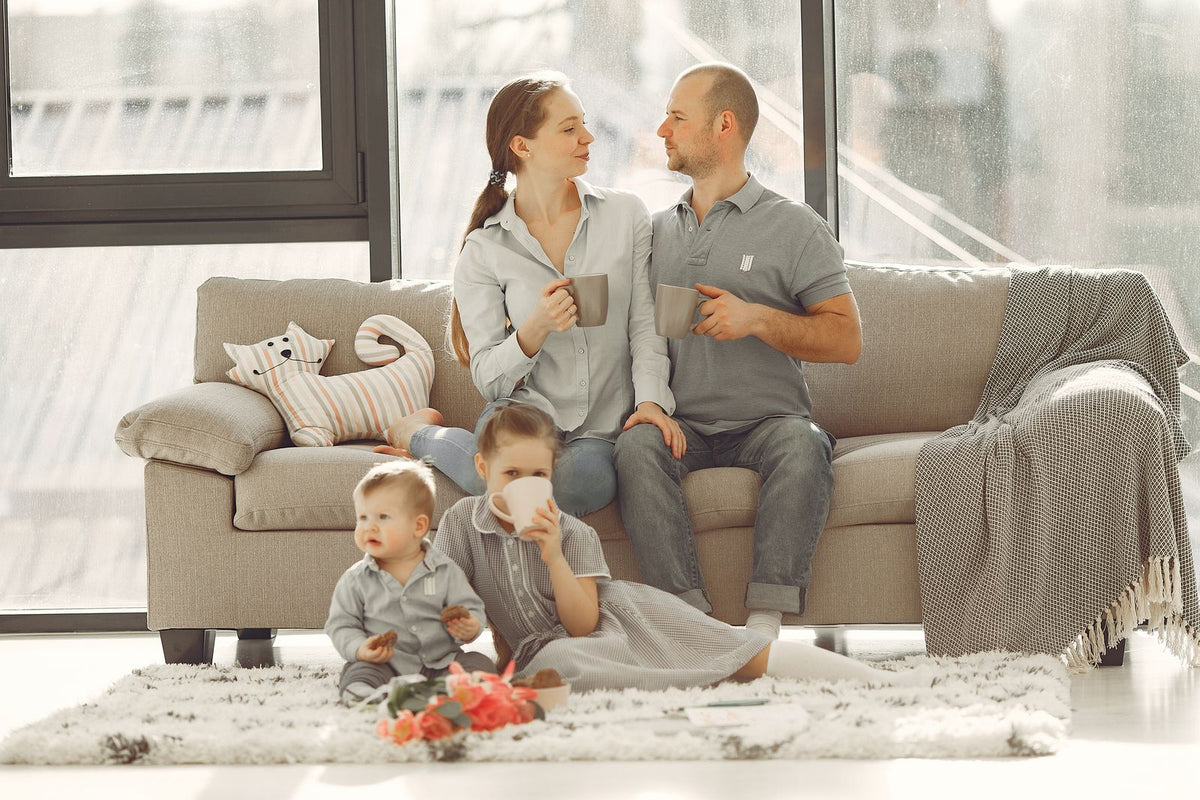
The moment your baby starts rolling, crawling or pulling up on furniture, your home looks very different. Cupboards, cables, stairs and windows that never caught your eye suddenly become the most interesting things in the house.
We're Dave and Alan, two brothers and dads who baby-proofed our own homes before starting BeeGo. This checklist pulls together official advice from the NHS, the HSE Child Safety Checklist and other recognised safety organisations, room by room, so you can work through your home one space at a time.
Start here: get down on your hands and knees and look at each room from your child's height. The HSE recommends checking every room this way, including halls, landings, the garden, the shed and the garage. You'll spot things you'd never notice standing up.
Kitchen
The kitchen is full of heat, sharp edges and things that look like food or drink (our full kitchen guide goes into more detail). These are the steps the NHS and HSE recommend:
- Cook on the back rings first and turn pot and pan handles inwards, away from the edge.
- Fit a cooker guard and keep the oven area clear. An oven door lock is a simple extra step that helps keep curious hands from opening a hot oven.
- Keep hot drinks well out of reach, and don't hold a hot drink while holding your baby. The NHS notes a hot drink can still scald 15 minutes after it was made.
- Skip the tablecloth. A toddler can pull it, and everything on it, straight down.
- Lock cupboards and drawers that hold knives, scissors, breakables and cleaning products. Not sure which type? See magnetic vs adhesive strap locks. Keep the knife block out of reach.
- Keep the dishwasher closed and locked, and lock the fridge and freezer if there are foods or drinks your child shouldn't get to.
- Use a cordless kettle, or one with a short or curly flex, pushed to the back of the counter.
- Empty sinks and buckets straight after use.
Living room
- Secure TVs and heavy furniture such as bookcases, chests of drawers and TV stands to the wall or floor, to reduce the risk of them tipping if climbed on.
- Cushion sharp corners on coffee tables and units.
- Move climbable furniture away from windows. Sofas, chairs and toy boxes all make easy steps up.
- Fit a fireguard on any open fire, fixed to the wall, with nothing placed on top.
- Use the harness on high chairs, bouncers and other seats, and never leave your baby alone on a raised surface such as a sofa or changing table.
- The HSE advises not using baby walkers.
Stairs, hallway and doors
- Fit stair gates at the top and bottom of the stairs, installed correctly and following the maker's instructions. The NHS advises keeping them in place until your child is at least 2.
- Check banister gaps. The NHS recommends boards or safety netting where gaps are wider than 6.5cm.
- Keep the steps clear of toys, shoes and bags.
- Use door stoppers to help protect little fingers from slamming doors. The HSE notes these should not be used on fire doors.
- Consider door handle locks on rooms you'd rather your toddler didn't wander into, such as the utility room or home office. Our door safety guide has more.
Windows and blinds
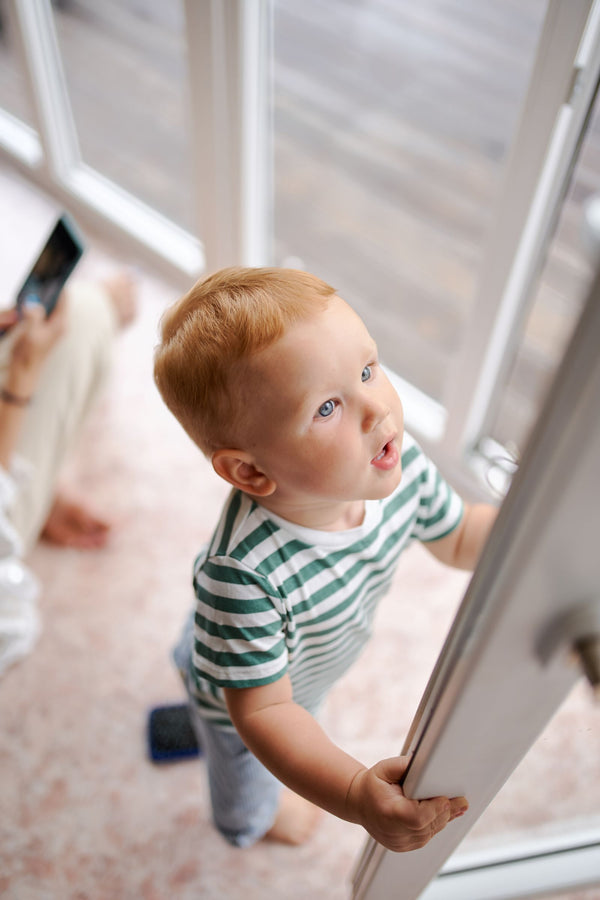
Falls from windows are one of the most serious risks for young children, and RoSPA recommends restrictors on windows above the ground floor. Children are quick to climb onto furniture or drag a toy box over to reach a window. Read our window safety guide for the full picture.
- Fit window restrictors on upstairs windows. The HSE advises choosing restrictors that an adult can release without tools, so you can still get out quickly in a fire.
- Keep beds, cots and furniture away from windows.
- Secure blind and curtain cords with a tie-down or tension device, and keep looped cords out of reach, especially in a child's bedroom.
- Check balcony railings for gaps a child could climb through or use as a foothold.
Know your restrictor's limits. A restrictor limits how far a window opens, but it isn't built to take a child's full weight pushing, leaning or climbing against it. Every restrictor has a maximum force it's designed to hold, so check the instructions. The BeeGo window restrictor, for example, is rated to a 30kg pull force, but only when it's fitted correctly on a clean, dry surface and left for at least 72 hours before use so the adhesive can fully set. Use restrictors alongside the other steps here: keep furniture away from windows, and always supervise children near an open window.
Bedroom and nursery
Safe sleep advice from the NHS and HSE:
- Put your baby to sleep on their back, feet to the foot of the cot, on a firm, flat mattress.
- Keep the cot clear of pillows, duvets, bumpers, soft toys, pods and nests, and keep your baby's head and face uncovered.
- Have your baby sleep in their own cot or Moses basket in your room for every sleep for at least the first 6 months.
- Keep the room between 16°C and 20°C, and keep the cot away from heaters, radiators and direct sunlight.
- Don't use car seats, swings or bouncers for routine sleep. If your baby falls asleep in the car seat, take them out when you arrive.
- Never put necklaces, ribbons or strings on young children, and the HSE advises against teething jewellery.
Bathroom
- Stay within arm's reach at bath time, every time.
- Run the cold water first, then add hot, and check the temperature with a bath thermometer or your elbow before your child gets in.
- Remember a bath seat is not a safety device, and babies can drown in as little as 5cm of water.
- Empty the bath straight after use.
- Fit toilet locks on all toilets.
- Lock away razors, and keep shampoos, cosmetics and cleaning products out of sight and reach.
Medicines, chemicals and small items
- Store medicines, vitamins, alcohol and e-cigarettes in their original containers in a high, locked cupboard.
- Keep laundry pods and detergents in their original containers, up high and locked away, and keep the washing machine and dryer doors closed.
- Keep handbags, plastic bags and nappy sacks out of sight and reach.
- Button batteries are a serious hidden hazard. The UK Office for Product Safety and Standards advises keeping spare and used batteries locked away, and keeping remotes, key fobs and toys out of reach if their battery compartment isn't secured with a screw. If you think your child has swallowed one, go straight to A&E and don't give them anything to eat or drink. Our guide to hidden hazards at home covers batteries, magnets and more.
Fire and electrical safety
- Fit smoke alarms on every level of your home, test them regularly, and practise a fire escape plan as a family.
- Fit a carbon monoxide alarm wherever fuel is burned, and have appliances serviced every year.
- Keep matches and lighters in a high, locked cupboard.
- Keep hair straighteners and other hot or electrical items out of reach, and don't overload sockets.
- Keep a fire blanket in the kitchen, out of children's reach.
Garden and outdoors
- Make sure children can't get out onto the road.
- Stay within arm's reach near water, and cover or fence off ponds, water butts and water features. Empty and store paddling pools and buckets after use.
- Lock garden chemicals and tools in the shed.
- Keep play equipment in good repair, and supervise children around animals.
Be ready if something happens
No home can be made completely risk-free, and nothing replaces watching your child. The HSE recommends keeping a stocked first aid kit out of children's reach, with emergency numbers listed. As children grow, teach them your address, postcode or Eircode, and when to call 999 or 112 (both work in the UK and Ireland).
Baby-proofing isn't a one-off job. Walk through this checklist again each time your child reaches a new stage, whether that's rolling, crawling, pulling up, walking or climbing. Our stage-by-stage timeline shows what to look out for at each one.
Sources
This guide draws on advice from the following organisations.
- NHS – Baby and toddler safety
- NHS – Reduce the risk of sudden infant death syndrome (SIDS)
- HSE – Child Safety Checklist for parents
- National Child Mortality Database – Open windows safety notice (citing RoSPA)
- Westmorland and Furness Council – Household safety (blind cords, citing RoSPA)
- Office for Product Safety and Standards – Button battery safety
This guide offers general information for parents and is not a substitute for professional or medical advice. Always follow the manufacturer's instructions for any safety product and supervise children at all times.